Showing posts with label websites. Show all posts

Wednesday, June 6, 2018

17 Pounds Of Plastic Kills Whale, Highlighting Ocean Pollution


Some 80 plastic bags extracted from within a whale are being laid out in Songkhla, Thailand, in this still image captured from video footage.
Thailand's Department of Marine and Coastal Resources/Social Media/via REUTERS ATTENTION EDITORS

Around 80 sopping wet, black plastic bags lined the floor of an operating room in Thailand last week after they were pulled from the stomach of a whale found stranded on a beach.
The pilot whale, which washed ashore in the southern province of Songkhla, later died after veterinarians tried for five days to save its life, according to the country's Department of Marine and Coastal Resources. An autopsy found nearly 17 pounds of plastic inside the whale's belly, a marine official told Reuters.
The whale's death and photos released by the department serve as a reminder of a growing global problem: plastic debris flowing into the ocean and killing wildlife.
"We are creating the horrible dystopian future that nobody wanted," Enric Sala, an explorer-in-residence and marine ecologist with National Geographic, tells Here & Now's Robin Young.

Tuesday, April 17, 2018

adidas makes shoes out of ocean plastic

Adidas sold 1 million shoes made out of ocean plastic last year, CEO Kasper Rorsted told CNBC on Wednesday.
The German sportswear giant launched last year three new versions of its UltraBoost shoe made out of plastic found in the ocean. It teamed up with environmental initiative Parley for the Oceans to create the shoe.
At the time, Adidas said it it wanted to create a million pairs of the UltraBoost shoes.
"We last year sold 1 million shoes made out of ocean plastic," Rorsted told CNBC in a TV interview.
Each pair of shoes reuses 11 plastic bottles.
Adidas reported quarterly earnings on Wednesday in which it said it expected another year of sales and profit growth, but at a slower pace than in 2017cnbc

shop adidas and parley ocean plastic shoes!

Tuesday, January 23, 2018

Land open to oil and gas drilling by during Presidents Bush (left), Obama (center), and proposed by Trump (right)


Where Coastal States Stand on Offshore Drilling
Orange: Opposes, Blue: Governor is in Favor, Tan: Undecided


At the End of the George W. Bush Administration
Blue: Open to Oil and Gas Drilling, Yellow: Not Yet Open, Orange: Under Protection

At the End of the Obama Administration 
Blue: Open to Oil and Gas Drilling, Yellow: Not Yet Open, Orange: Under Protection

Trumps Proposal
Blue: Open to Oil and Gas Drilling, Orange: Under Protection


Where Is America’s Offshore Oil?
Economically Recoverable Oil and Gas


Monday, January 22, 2018

Turnover In Trump's White House Is 'Record-Setting'


"While some turnover is expected and possibly beneficial, excessive turnover portends problems," writes Kathryn Dunn Tenpas, a nonresident senior fellow in governance studies at the Brookings Institution. "[President Trump] has valued loyalty over qualifications and suffered from a White House that has functioned in a chaotic manner. Both features have made it difficult to retain staff and have contributed to the governance difficulties he has encountered."

Thursday, October 26, 2017

waterfowl genital

A sexual arms race waged with twisted genitals has been discovered in waterfowl. 
The genitalia of the females of these species have at times apparently evolved to make it harder for males to successfully impregnate them, according to new findings that shed light on the eternal war of the sexes. 
Most birds lack phalluses, organs like human penises. Waterfowl are among the just 3 percent of all living bird species that retain the grooved phallus found in their reptilian ancestors.
Male waterfowl are especially unusual in that their phalluses vary greatly among different species in length, ranging from a half-inch to more than 15 inches long. They also display a remarkable level of diversity how elaborate they are, ranging from smooth to covered with spines and grooves. 
Scientists had speculated that male waterfowl evolved longer phalluses to give them a competitive edge over those not as well-endowed when it came to successfully fertilizing females. 
After looking at the genitalia of a male duck, "I became immediately intrigued by what the female anatomy would look like to accommodate such a bizarre organ," said behavioral ecologist Patricia Brennan, who researches at both Yale University and the University of Sheffield in Britain. 
Now Brennan and her colleagues unexpectedly find the vaginas of female waterfowl can be just as ornate as male genitalia, full of "dead ends" and other countermeasures that all seemed design to exclude the phallus, findings to be detailed online May 2 in the journal PLoS ONE. 
Like lock and key
In most birds, the vagina or oviduct is a simple tube. However, in some waterfowl, there are sacs in the sides of this tube, pockets that are just inside the opening of the oviduct. These sacs appear "to function as 'dead-ends,' or false passages," Brennan said. "If the phallus were to enter one of these sacs, it would not progress further into the oviduct where it would deposit sperm more effectively." 
Waterfowl oviducts can also possess a series of tight, clock-wise spirals. "Interestingly, the male phallus is also a spiral, but it twists in the opposite, counterclockwise, direction," said Yale ornithologist Richard Prum, one of Brennan's co-authors on the research. "So, the twists in the oviduct appear designed to exclude the opposing twists of the male phallus," behaving like the opposite of a lock-and-key system. 
The number of sacs and spirals in the reproductive tract of various female waterfowl seems to increase as the male phallus gets longer across the 14 different species of ducks and geese tracked by Brennan and her colleagues. 
"I became very good at predicting what the genitalia of one sex would look like by looking at the other sex first," Brennan said. 
This suggests the genitalia of males and females have evolved to surpass each other in a kind of escalating arms race over which sex gets to control reproduction. 
"Despite the fact that most waterfowl form monogamous pairs, forced copulations by other males—the avian equivalent of rape—are common in many waterfowl," said Prum. The length of the phallus of a species is strongly linked with the frequency of forced copulations. 
"In response to male attempts to force their paternity on females, female waterfowl may be able to assert their own behavioral and anatomical means of controlling who fathers their offspring," Brennan said. 
This means that male waterfowl evolve more ornate phalluses to attempt to successfully overcome the physical defenses raised by ever more elaborate vaginas, and vice versa. 
"Some large waterfowl that are highly monogamous, like geese and swans, have small phalluses, whereas other species that are quite small but more promiscuous have more elaborate genitalia," Brennan said. "A larger phallus is advantageous in situations where there is more promiscuity, while more monogamous species have a much reduced phallus."

Monday, April 3, 2017

How America's Idea Of Illegal Immigration Doesn't Always Match Reality


more info on the statistics on npr

The best and worst places to be a working woman

The Economist has published its fifth annual “glass-ceiling index”. It combines data on higher education, workforce participation, pay, child-care costs, maternity and paternity rights, business-school applications and representation in senior jobs into a single measure of where women have the best—and worst—chances of equal treatment in the workplace. Each country’s score is a weighted average of its performance on ten indicators. 

The overall picture painted by the data is that the long trend of improving conditions for working women has flatlined within the OECD, a club of mostly rich countries. In 2005, 60% of women were in the labour force; ten years later, this ratio had edged up only slightly to 63% (it was 80% for men in both years). With relatively few women climbing the ranks, and strong old-boys’ networks helping men reach the top, female representation in well-paid and high-status jobs is closer to a third than half. And the gender wage gap—male minus female wages, divided by male wages—is still around 15%, meaning women as a group earn 85% of what men do.

These broad averages conceal wide variation between countries. The Nordic countries clearly lead the world on gender equality at work. The top four positions this year belong to Iceland, Sweden, Norway and Finland, just as they did in 2016 (though Sweden and Norway did switch places). Women in these countries are more likely than men to have a university degree and be in the labour force. They make up 30-44% of company boards, compared with an average of 20% across the OECD. And voluntary political-party gender quotas mean that women are well-represented in parliaments. In October, women won a record 48% of the seats in Iceland’s lower house. At around two-fifths, Scandinavian women’s share of parliamentary seats ranks in the top 10% globally.

Latest updates

See all updates
At the other end of the index are Japan, Turkey and South Korea. Women make up only around 15% of parliaments in these countries, and are underrepresented in management positions and on company boards. In South Korea, just 2% of corporate directors are female. Similarly, fewer women than men have completed tertiary education and are part of the labour force. Only 35% of Turkish women are working or looking for work, and a mere 16% have graduated from university.

Progress in gender equality has a tendency to build upon itself. In Iceland, which currently provides the most equal working environment for women according to our index, female workers staged a protest last October in which they marched out of their offices early to call attention to the country′s 14% gender pay gap. If Japanese women were to do likewise, they would be leaving much earlier.


A comprehensive noise map created by the U.S. Bureau of Transportation Statistics of the interactive U.S. map on noise produced primarily by airports and interstate highways.

Chicago

Los Angeles

New York

Wednesday, March 22, 2017

WATCH: Raindrops Catapult Bacteria Into The Air, And It's Beautiful

When you step outside after a big rainstorm and take a deep whiff of that fresh, earthy smell, you're mostly smelling a chemical called geosmin.
It's a byproduct of bacteria and fungi. And something about rain lofts the chemical — and sometimes the organisms themselves — into the air, a process that not only helps release that earthy smell but may, in very rare conditions, spread diseases.
Somehow raindrops launch tiny living things off the ground.
Wind can pick bacteria up from the ground and bring into the sky, sometimes settling in clouds thousands of feet above us. Sea spray can also send bacteria flying. The mystery has been, how does rain do it?
Now, mechanical engineers writing Wednesday in the journal Nature Communications say they've figured it out. It has to do with tiny bubbles.
Using high-speed cameras and fluorescent dye, the researchers filmed drops of water as they fell on different types of soil infused with bacteria. They watched as the drops delicately catapulted the microbes into the air. WATCH!

who benefits under trump and the republicans health care plan


Both Obamacare and the recent Republican replacement proposal use refundable tax credits to help people buy their health insurance. That is part of the reason the new G.O.P. bill is under fire from conservatives, who see it as a new entitlement program.
But the structure of the tax credits is really different. Obamacare calculated the credits based on the cost of insurance in a given area and how much the purchaser could afford to pay. The Republican plan hands out tax credits on a flat basis, according to age. (Both plans cut off subsidies at a certain income level, on the assumption that high earners can pay their own way.) That means that the government subsidy you might get under the different plans would depend on a number of factors – age, income, address.
Analysts at the Kaiser Family Foundation estimated these subsidies for every county in the United States across these three variables. The result, shown in the maps above, reveals stark contrasts in federal support, particularly for lower-income Americans.
The biggest losers under the change would be older Americans with low incomes who live in high-cost areas. Those are the people who benefitedmost from Obamacare.
For some people, the new tax credit system will be more generous. The winners are likely to be younger, earn higher incomes and live in areas where the cost of health insurance is low.
Obamacare's subsidies were structured to limit how much low- and middle-income Americans could be asked to pay for health insurance. Under the G.O.P. proposal, many of the people whose tax credits would fall sharply would be likely to end up uninsured. For people with few resources, a gap of several thousands of dollars between their tax credit and the cost of coverage would be impossible to make up.
That's why many policy experts believe that the new system would result in fewer Americans having health insurance.
But if you put Obamacare out of your mind, this program still represents a very large outlay of federal money to help Americans buy health insurance. Before Obamacare passed, those buying their own insurance did not receive government subsidies. And the tax credits in the Republican bill would go to people regardless of whether they even paid taxes -- another reason conservatives oppose it.


working woman glass-ceiling index


Saturday, January 21, 2017

women's marches around the world

https://www.nytimes.com/interactive/2017/01/21/world/womens-march-pictures.html

Mexico

Antarctica

 Sydney, Australia

Bangkok

Chicago

London

Nairobi

New York

Oslo

 Paris

Vancouver

Washington, DC

Sunday, December 18, 2016

google time lapse videos


black lung

A display case at NIOSH shows a normal lung and a diseased black lung from inhaling coal dust and other harmful particles while coal mining.
Howard Berkes/NPR npr


Tuesday, November 8, 2016

snowballs wash up on beach

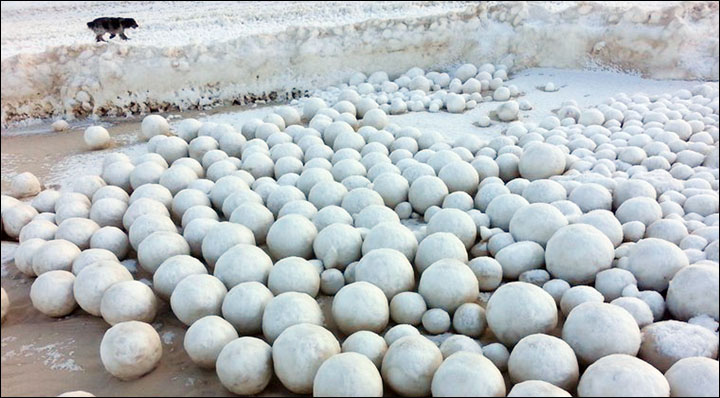
There were snowy, icy balls everywhere.
Videos and photos from western Siberia, on the Gulf of Ob, showed an entire beach covered in snowballs that had apparently washed ashore. In one image published online by the Siberian Times, a woman sat on the frozen balls. In another, a dog ran near the balls, which had also formed what looked like a vertical mass of balls mashed together into an icy ball-wall.
The BBC reports that the balls started washing up about two weeks ago. They're strung along some 11 miles of coast and are said to range from about the size of a tennis ball up to almost 3 feet across.
Here's a video of the beach shot by someone named Valery Togo, who told the Russian news site Vesti Yamal that he lives in the nearby town of Nyda, which is on the Yamal Peninsula just above the Arctic Circle.


The BBC reports the chilled orbs that washed ashore "result from a rare environmental process where small pieces of ice form, are rolled by wind and water, and end up as giant snowballs." It adds:
"Russian TV quoted an explanation from Sergei Lisenkov, press secretary of the Arctic and Antarctic Research Institute:
" 'As a rule, first there is a primary natural phenomenon — sludge ice, slob ice. Then comes a combination of the effects of the wind, the lay of the coastline, and the temperature and wind conditions.'
" 'It can be such an original combination that it results in the formation of balls like these.' "
The Collins English Dictionary defines "slob ice" as "sludgy masses of floating ice" in Canadian English.
Rare and original as the ball-forming process might be, this is not the first time humans have witnessed these globular creations. In 2010, a Chicago Tribune video showed snowballs that washed up along Lake Michigan.

npr